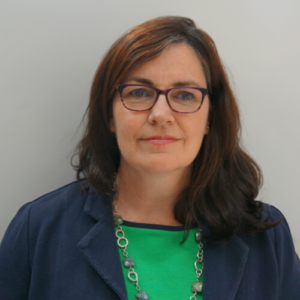
A conversation with Frances Reid, Director of Programmes and Every Woman Study™ Lead, World Ovarian Cancer Coalition
11 December 2025
The Every Woman Study™: Low- and Middle-Income Country (LMIC), published today in the Lancet Obstetrics, Gynaecology & Women’s Health, delivers the first comprehensive picture of the lived experiences of women with ovarian cancer in LMIC.
A total of 2,446 women from 82 hospitals in 22 low-and-middle-income countries in Africa, Asia and Central and South America, participated in this study which combined patient-reported data with clinical insights.
The EWS-LMIC Edition is a joint initiative between the World Ovarian Cancer Coalition (the Coalition) and the International Gynecologic Cancer Society (IGCS). Today, The Report of the EWS-LMIC was also released, providing additional insights from the study as well as recommendations for actions to help alleviate the issues found including low access to diagnosis and care, low awareness and high costs of ovarian cancer.
Q1: In the Lancet Obstetrics, Gynecology & Women’s Health, the authors note, “To our knowledge, this is the first study to collect detailed information on the ovarian cancer related experiences of women in LMICs.” Why is this so important?
Frances: There are lots of reasons! Most importantly it is because 70% of women with ovarian cancer live in LMICs, and nothing has been known about their experience to date. Previous studies almost exclusively feature women in high-income countries. Relevant national data is vital when considering how best to tackle the significant challenges of improving survival and quality of life for women. The scale of the study is important too, with almost 2,500 women taking part from 22 countries, through 82 different hospitals. The breadth of patient experience information, from family income, experience of diagnosis and treatments, and support needs, combined with clinical data provides an enormously powerful source of data that will be useful for years to come.
Q2: What were the key findings of the EWS-LMIC study?
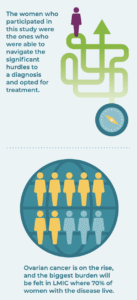
Frances: The Lancet article is just the first of several papers we hope to publish on the results, given the richness and depth of the data. In this paper we have revealed how late-stage diagnosis, low knowledge of ovarian cancer, and financial hardship are preventing women from receiving the best possible care in LMICs. Their experience of symptoms are very similar to other studies, but the impact of having to pay for diagnostic tests and/or treatments are financially crippling with a third of women saying their family income has fallen below the level they need to live on as a result of their diagnosis and treatment.
In terms of knowledge, just one in four women had heard of ovarian cancer and knew something about it. Those who had not heard of the disease were less educated, came from lower income families and lived in lower human development index countries. Lower education was also associated with the chances of late stage diagnosis of the disease. This is important as it means any actions taken to improve awareness and late-stage diagnosis must be targeted at those with the least.
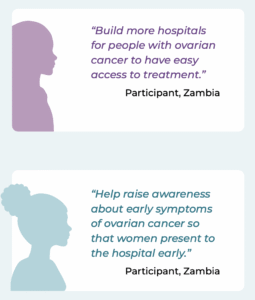
It’s also important to note what the women prioritised, which was the development of screening programmes, and free access to diagnostic tests and treatments, as well as raising awareness of symptoms and reducing delays in diagnosis.
In future papers we will look at variations in access to tests and treatments, women’s emotional support needs and routes to diagnosis.
Q3: Can you tell us about some of the comments and challenges women shared about their ovarian cancer experience? How were they impacted emotionally, physically, and financially?
Frances: I want to begin with a story from one of our country lead clinicians, who recounted to me that she had seen five patients who all most likely had ovarian cancer, but just one of them could afford to proceed to a diagnosis. That means, the findings and comments in the EWS-LMIC study are from women who actually made it that far. There are many that stand out, and bring life to the study, but the ones that touched me most were about delays due to financial hardship – of women starting herbal medicines as they could not afford chemotherapy, or having to frequent prayer houses because they could not afford a doctor visit, despite increased suffering. One woman, in an upper-middle income country had tried to get a genetic test, but it was unaffordable. She later went on to be diagnosed with ovarian cancer, and did get testing as part of a study and was indeed BRCA positive. Her case could have been prevented.
Overall I was also aware that whilst women felt strongly that other women should be made aware of the symptoms of ovarian cancer, there was an even stronger need for doctors to be able to recognise the condition. Misdiagnosis and inappropriate tests were common reasons for delays. Whilst this is challenging, it does give hope that improvements can be made.
Q4: How will this study impact women in LMIC? How can this data be leveraged to drive change?
Frances: We strongly hope that it will be used to drive change, and there is already evidence of that happening. Our overall global recommendations include reducing time to diagnosis, making diagnostic tests and treatments available and affordable, improving support for women (both financially and psychologically), and increased focus on prevention. The results in Brazil are being used to help draft a white paper on ovarian cancer in the public health system, a new support group Ovarian Cancer Malaysia has been formed and already bringing great benefit to women, and we recently announced the launch of a collaboration with National Institute for Cancer Research and Treatment in Nigeria (NICRAT) on a pilot programme, “Enhancing Prevention, Early Diagnosis, and Treatment of Ovarian Cancer: A Pilot Initiative in Nigeria” to reduce the burden of the disease in the country. Policy makers need data on ovarian cancer to factor into their national cancer control plans and data from the study is already playing an important part in that.
Read the study in the Lancet Obstetrics, Gynaecology and Women’s Health here.