An interview with Ovarian Cancer Australia.
22 January 2026
1. Tell us about how Ovarian Cancer Australia got started.
Ovarian Cancer Australia (OCA) began as a grassroots movement driven by personal experience and a determination to improve outcomes for women affected by ovarian cancer. OCA’s origins began with Sheila Lee, who was diagnosed with advanced ovarian cancer in 1999. During her illness, Sheila became acutely aware of the limited information and support available. Together with her husband Simon Lee, and others determined to create change, Sheila became a catalyst for ovarian cancer advocacy, laying the foundations for what later became Ovarian Cancer Australia. Despite her death in 2000, Sheila’s legacy lives large, and today Ovarian Cancer Australia proudly stands as the national leading body for advocacy, awareness and support, ensuring no one impacted by ovarian cancer walks alone.
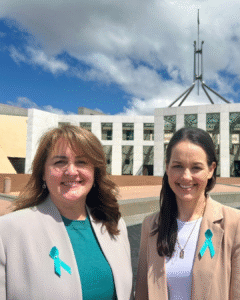
This year, as Ovarian Cancer Australia celebrates 25 years of providing support, care and advocacy to women and families impacted by ovarian cancer, the organisation reflects on how far it has come, from a small, determined group to the national leading body for advocacy, awareness and support, ensuring no one impacted by ovarian cancer walks alone.
2. What are the most significant challenges faced by women with ovarian cancer in Australia?
Women with ovarian cancer continue to face challenges from even before the time of diagnosis, with an often-lengthy time from symptom recognition to investigations then to diagnosis. Once diagnosed, women then enter the complex world of treating planning for a rare or less common cancer in the growing era of personalised medicine with many different subtypes of disease.
Along with the difficulties of diagnosis, treatment and physical side effects that come with surgery and chemotherapy; women also experience significant emotional distress including anxiety, depression, fear of cancer recurrence or progression and impacts on body image, identity, and relationships. All this alongside what is often a poor prognosis cancer, and the emotional burden is heavy. The high rates of recurrence and limited treatment options also add to emotional stress.
In addition to these physical and mental challenges, are the impacts on finances both from out-of-pocket costs of treatment as well as loss of income which just add to the burden.
These impacts can be even more pronounced for certain groups, including culturally and linguistically diverse backgrounds, and women living in rural and remote areas of Australia.
3. What are your main priorities and programs supporting those affected by ovarian cancer?
Ovarian Cancer Australia provides person-centred care and support through services delivered by specialist ovarian cancer nurses, counsellors, and psychologists. The Support Team complement care and support provided through the health system, offering individualised guidance, disease expertise and interventions including psychology and counselling.
OCA also provides a suite of evidence-based resources and facilitates in person and online peer support groups.
In addition to supporting women with ovarian cancer and their loved ones, OCA also leads policy and advocacy initiatives to reduce known variation in care across the country, see more timely access to effective and affordable medicines, and engage Government and key decision makers to ensure ovarian cancer is a national priority and receives greater research investment.
4. Tell us about what you have planned for Ovarian Cancer Awareness Month (February) in Australia.
Ovarian Cancer Australia has a full month of high impact activity ahead, designed to drive awareness, strengthen advocacy and generate vital support for people living with and affected by ovarian cancer.
With public awareness at the core of our mission, we are launching an interactive quiz to test what Australians know about ovarian cancer while addressing critical knowledge gaps with clear, evidence-based facts and figures. The quiz will highlight the often-overlooked symptoms of ovarian cancer, reinforcing the importance of early recognition and informed conversations.
Advocacy remains a cornerstone of Ovarian Cancer Australia’s work. This month, we are proud to release a joint statement alongside ANZCOG and the Ovarian Cancer Research Foundation. This unified message underscores the strength of sector collaboration and calls for continued government focus and investment to deliver better outcomes for everyone impacted by ovarian cancer. We will also host our 12th annual Parliamentary Breakfast, bringing together policymakers, clinicians, researchers and community voices to elevate ovarian cancer as a national health priority.
In partnership with Inherited Cancers Australia, we will also launch a powerful case study that shines a light on hereditary cancer risk and the real-world impact of improved genetic awareness, testing and support, helping to inform policy, practice and community understanding.
Throughout the month, our partners will be activating campaigns to support our work, alongside community members who will be getting involved through fundraising events and activities across the country.
We will also be calling on Australians to support our annual Giving Day on 18 February, when every donation will be doubled for 24 hours, doubling the impact for women and families affected by ovarian cancer.
You can learn more about Ovarian Cancer Australia on their website: https://www.ovariancancer.net.au/