By Frances Reid, Director of Programmes
24 November 2025
The location of this year’s International Gynecologic Cancer Society meeting in Cape Town, South Africa could not have been more fortuitous.
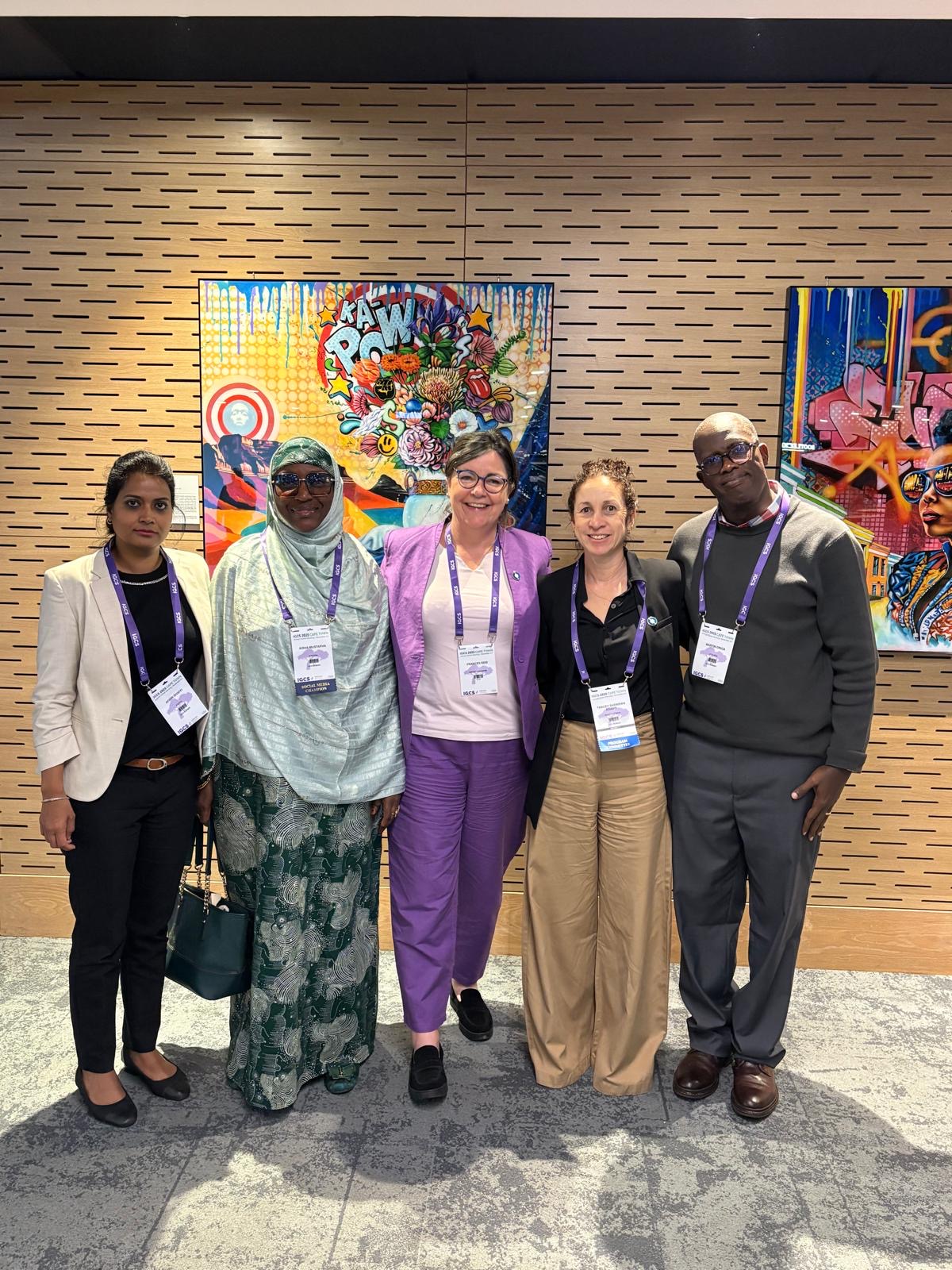
With the Co-Chair (Clinical) of our Every Woman Study LMIC Edition and Global Expert Advisory Group on Ovarian Cancer, Dr Tracey Adams, living and working in the city, it seemed the best place for us to be sharing study results, discussing what more we can do to turn data into action, and having a little celebration of everything that has been achieved, including our forthcoming publication of the first results.
The location also meant a good contingent of our African collaborators were present, but we were also delighted to be together with our EWS-LMIC country leads from Nepal, India, Bangladesh, Kazakhstan, Vietnam, Jamaica and Argentina.
 Dr Adams presented to a packed audience on the variations in treatment in LMIC as seen through the Every Woman Study which received a very positive moderation from Dr Thomas Herzog:
“A lot of rich information…. and a road map for potentially transformative action….. A really outstanding study given its breadth and reach….. Highlights the inequity and a tool to get to the why.”
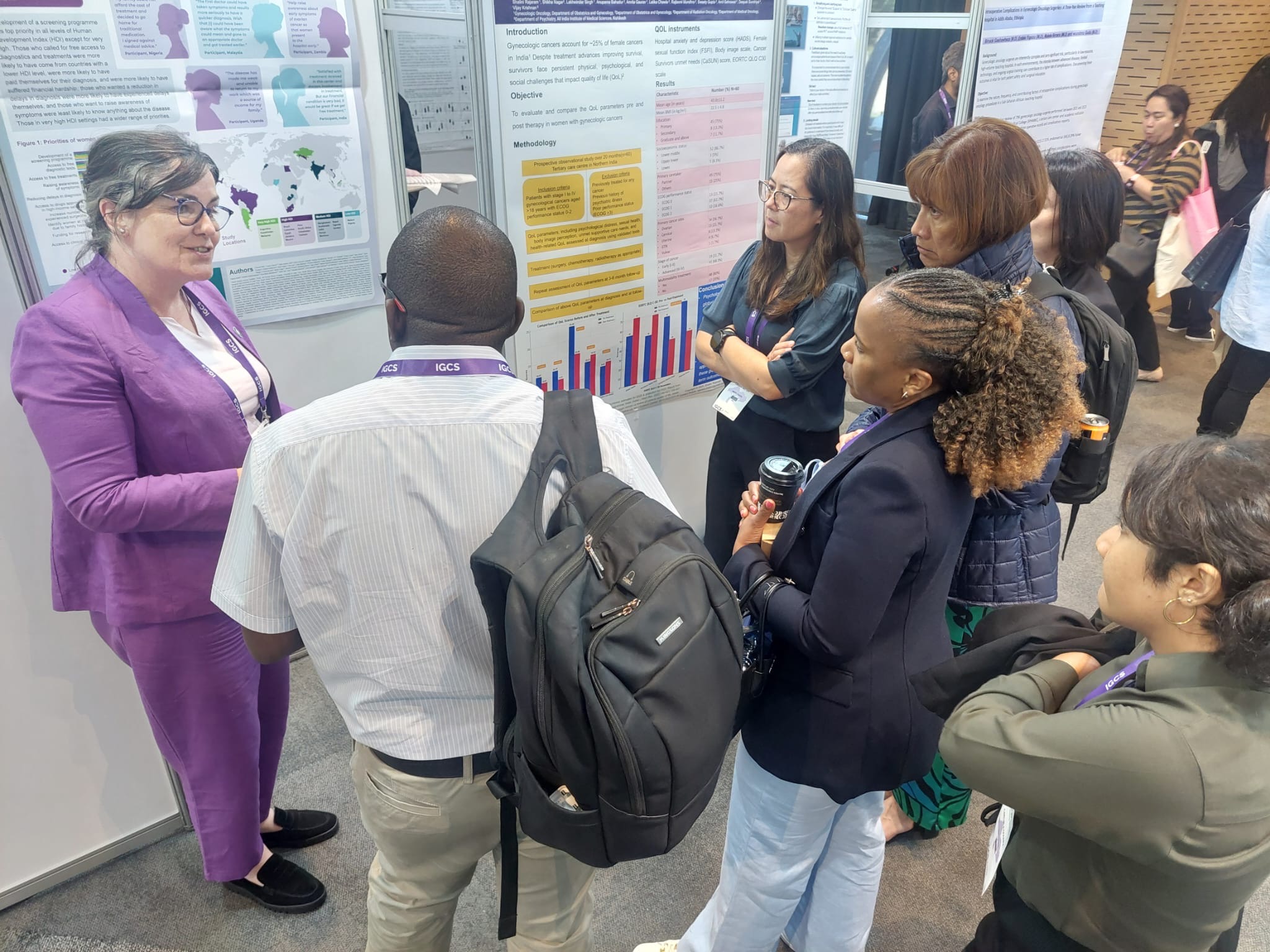
Dr Florencia Noll, our Argentina lead, and member of the Oversight Committee, also presented on the variation in emotional support needs, and how such needs were met (or not). And I gave a poster presentation on the priorities of women with ovarian cancer and how these map to their own experiences, largely based around the financial impact of the disease, and the need for early diagnosis.
The positivity with which the work has been met was a powerful motivator. Four of our African leads got together to compare and contrast their country findings, and scoped out a paper focusing on the Every Woman Study results in their region, and our Indian lead told us of her plans to extend the study more widely in her country. We also had time to hear how the Nigerian Ovarian Cancer Pilot launch had gone, an example where data has led directly to action on the ground as they seek to raise awareness, train doctors, simplify referral pathways and access to medicines and genetic testing.
With my colleague Mikis Euripides who oversees the work of the Global Expert Advisory Group on Ovarian Cancer also in attendance, our time in Cape Town was wisely used meeting members of the Group and collaborators including Dr Karen Canfell of the University of Sydney. We discussed the next phase of the Global Expert Advisory Group’s work with Karen, which aims to establish a compelling rationale for a ‘pillar-based’ global mortality target for ovarian cancer and to mobilize collective action and against which progress can be tracked. This potential collaboration between our two organisations would build on the existing work the Group has done in identifying the global ovarian cancer priorities for both high income and low and middle incomes countries through the Every Woman Studies.
Cape Town is a stunningly beautiful city, and together with an excellent conference programme, we will have nothing but positive memories of our time there, and the work that is underway to leave no woman behind.