The 2018 Every Woman Study™
The World Ovarian Cancer Coalition undertook the Every Woman Study™ in 2018. The Study included the largest-ever global survey of women with the disease. The objective was simple: to address the evidence gap and identify a way forward to ensure the best chance of survival and the best quality of life for women with ovarian cancer.
Peer reviewed and published in the International Journal of Gynecologic Cancer, the Study included qualitative research with women in low- and middle-income countries and the 2018 World Ovarian Cancer Coalition Atlas – a literature review of incidence, mortality, survival, and trends around the world.
The Study showed what was already suspected – that there are major differences around the world in terms of best practices and local challenges in addressing ovarian cancer. No single region or country has all the answers, and all could benefit if best practices were shared and the variations were addressed.
The Every Woman Study™ was guided at every stage by an international panel of ovarian cancer experts and patient representatives, whose knowledge and insights were invaluable. We are also grateful to the women who participated in the survey, the clinicians who shared their perspectives, and partner organizations who supported the process.
women completed the survey
countries represented
languages available
clinicians contributed
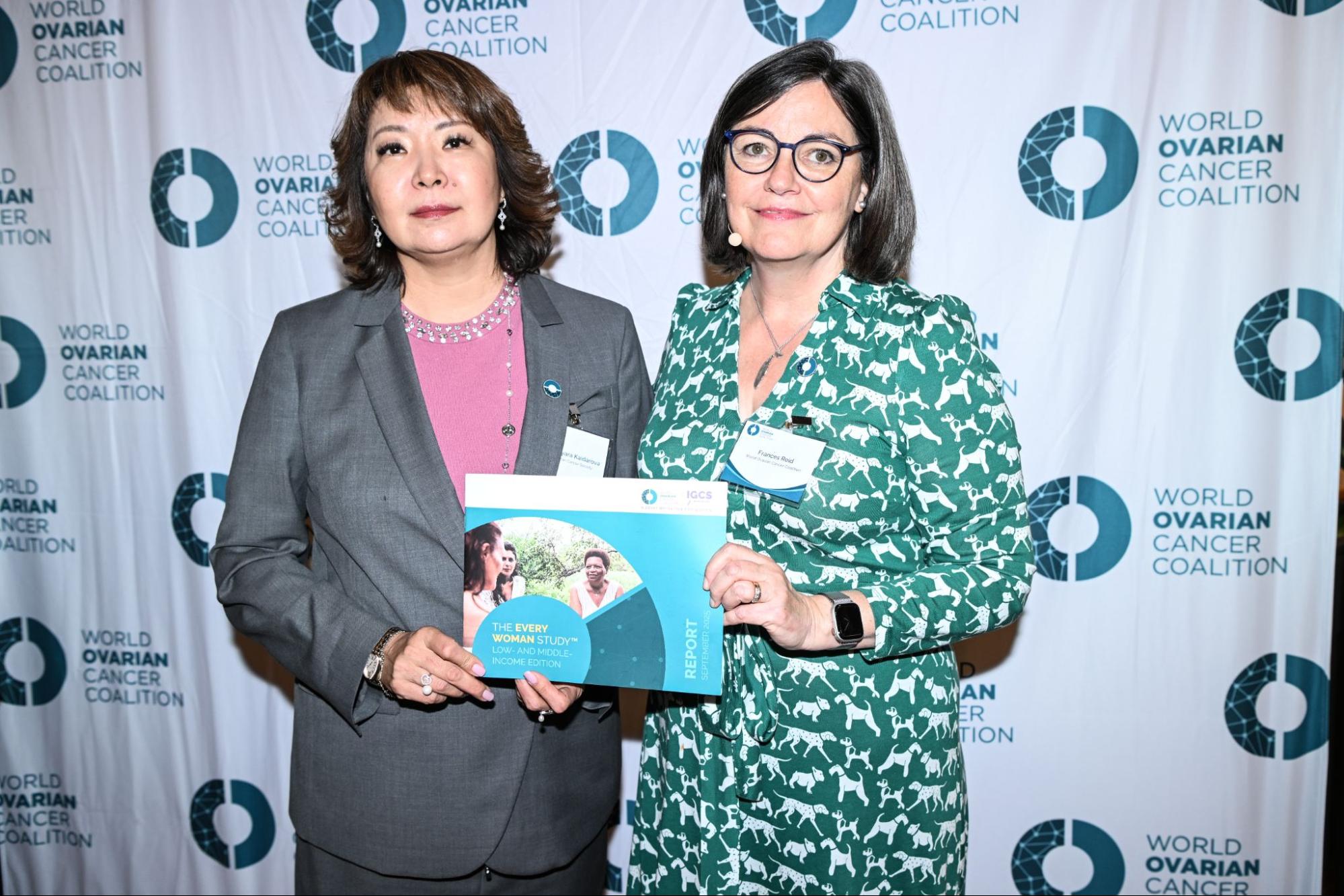
The Every Woman Study™ Low- and Middle-Income Edition
Building on the 2018 study, the Every Woman Study™ Low- and Middle-Income Edition (EWS-LMIC) is a joint initiative between the World Ovarian Cancer Coalition and the International Gynecologic Cancer Society (IGCS), implemented in 22 low- and middle-income countries.
The study aims to highlight the challenges and disparities women with ovarian cancer face and to address gaps in understanding women’s experiences in resource-limited settings. The survey, completed in 2025, was translated into 28 languages and distributed through hospital clinics and online platforms. Women within five years of their diagnosis were invited to participate either by interview, paper survey or a secure online link to the survey which covered their knowledge of the disease, route to diagnosis, treatment, personal priorities and their information, emotional and practical support needs.
A total of 2,446 women participated, sharing experiences about diagnosis, treatment, and support needs.
Participating countries: Argentina, Bangladesh, Brazil, Colombia, Egypt, Guatemala, India, Jamaica, Kazakhstan, Kenya, Malaysia, Malawi, Mexico, Morocco, Nepal, Nigeria, Peru, South Africa, Uganda, Uzbekistan, Vietnam, and Zambia.
Key Findings
- Low awareness: Just one in four women said they had heard of ovarian cancer and knew something about it before their diagnosis. This varied by country (from 3.3% to 63.2%)
- Financial impact: For almost a third of women, family income fell below what they needed to live on. Three quarters of women said their family finances were affected either greatly or to some extent
- Access barriers: A third of women travelled more than two hours to reach treatment; 14.6% travelled more than five hours
- Limited genetic testing and treatment: Access to advanced treatments like PARP inhibitors and genetic testing is extremely limited, especially in African nations
- Route and time to diagnosis: Median time from experiencing symptoms to starting treatment was three months and as much as 11 months in some countries
“I believe the EWS-LMIC will serve as a stepping stone to even further collaborations, more research, more impacts for patient care. And I actually see it opening doors for policy makers to recognise ovarian cancer as a huge burden… signing MOUs for genetic testing for ovarian cancer.”
– Dr. Aisha Mustapha, EWS Nigeria Clinician Lead
Calls to Action
Priorities for action will be determined by local results, resources and shared decisions amongst stakeholders. To address the urgent gaps revealed in the study, we propose the following key recommendations that feature in our Report:
Include ovarian cancer data in registries to drive cancer control plans and local action
Consider location of services and workforce expertise/workload
Reduce the time to diagnosis
Make access to the best possible treatment affordable for women
Increase emotional support for women and access to information
Educate about the relevance of knowing family history
Published Papers
The Lancet Obstetrics, Gynaecology, & Women’s Health – 11 December 2025: Experiences of Women with Ovarian Cancer in 22 Low- and Middle- Income Countries (Every Woman Study™ LMIC): a Cross-sectional Study
Journal of Cancer Policy – 16 April 2025: Challenges and opportunities in ovarian cancer care: A qualitative study of clinician perspectives from 24 low- and middle-income countries