Ovarian cancer is not a singular diagnosis, rather it is an umbrella term for a multitude of different types of cancer that affect the ovaries, fallopian tubes, and the primary peritoneal cavity.
It is estimated that there are more than 30 different types of ovarian cancer, and there is a very wide variation in incidence and outlook in terms of the different types.
Every person assigned female at birth is at risk of ovarian cancer, and there is currently no reliable screening test for its diagnosis. A Pap test (a cervical smear test), as commonly believed, does not detect ovarian cancer.
As a result and also due to the fact that symptoms are often confused with other, less severe, illnesses, most people are diagnosed once the cancer has already advanced and spread.
This makes ovarian cancer more difficult to treat and, as a result, it is often associated with poor survival.

Types of Ovarian Cancer
There are different types of ovarian cancer tumours, which are named after the type of cell they come from, the three main cell types that make up the ovary.
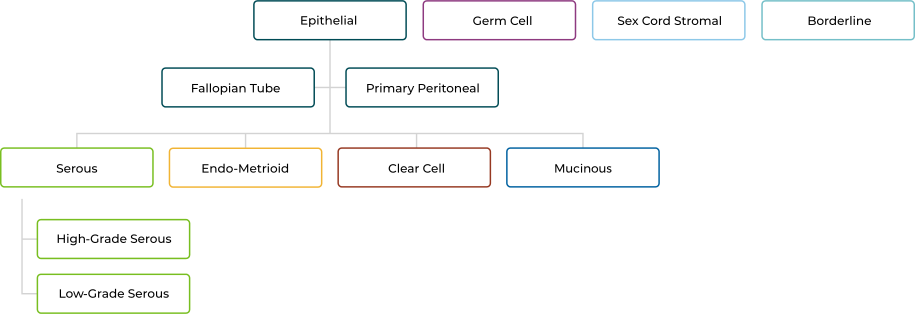
The most common type of ovarian cancer, accounting for about 90% of ovarian cancer tumours. Most fallopian tube cancers and primary peritoneal cancers are grouped within this category because they behave similarly and are treated in the same way.
A rare type of ovarian cancer that develops from the reproductive cells of the ovaries. Germ cell ovarian cancer often occurs in those who are under the age of 40, and is usually highly responsive to chemotherapy.
A rare type of ovarian cancer that comes from connective tissue cells in the sex cord or stroma. The most common type of sex cord stromal tumor is a granulosa cell tumour.
Also known as tumours of low malignant potential, these are a group of abnormal cells in the tissue covering the ovary. Doctors may not classify borderline ovarian tumours as cancer because they grow slower and in a more controlled way than cancer cells.
An extremely rare type of ovarian cancer. It is not certain whether the cells in SCCO are from ovarian epithelial cells, sex-cord stromal cells or germ cells.
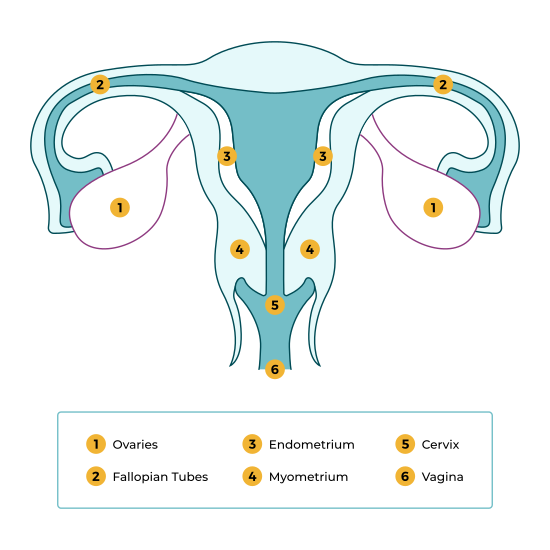
Anatomy of Ovaries
Many of our partner organizations have useful information and resources. For more detailed information about ovarian cancer, you may wish to contact one of these groups more local to you.
Ovarian cancer is often diagnosed at a late stage because it can be hard to detect. Knowing the symptoms and spotting the disease early can make treatment more effective.
Ovarian Cancer Key Stats
While every woman is at risk, ovarian cancer is overlooked and underfunded.
8th most common cancer among women in the world
8th most common cause of death from cancer among women in the world
By 2050, the number of women around the world diagnosed with ovarian cancer will rise over 55% to 503,448.
The number of women dying from ovarian cancer each year is projected to increase to 350,956 an increase of almost 70% from 2022.

Ovarian cancer is a global concern and much more needs to be done to tackle this disease on all fronts.
- Five-year ovarian cancer survival rates vary widely by country, ranging from 36% to 46% in more developed countries and lower in others.
- Overall survival is much lower than for other cancers, such as breast cancer, where many countries report rates near 90%.
- If trends continue, over 8 million women are projected to die from ovarian cancer worldwide.
- The majority of lives lost will be from low- and middle-income countries where 70% of those diagnosed live.
*Figures from Globocan 2022. Full details of Globocan’s projections can be found on their Cancer Tomorrow website.